
Executive Abstract & Strategic Industry Context
The global sports, outdoor, workwear, and lifestyle footwear markets are undergoing a fundamental paradigm shift away from elevated heel-to-toe drops (traditionally 10.0mm to 14.0mm) and restrictive, tapered toe boxes toward true 0.0mm zero-drop platforms and anatomical foot-shaped lasts (108mm–118mm forefoot spread). In this comprehensive technical dossier, our engineering research group at Jinjiang Lute Footwear Co., Ltd. examines the biomechanics, material compounding, international regulatory compliance, and factory-direct procurement strategies required to commercialize high-performance barefoot footwear at scale.
Specifically focusing on Ocean container CBM utilization, 20GP vs 40HQ payloads, frosted CPE zip packaging, palletization stacking strength, and per-pair landed freight savings., this analysis provides overseas product managers, DTC footwear founders, procurement directors, and orthopedic footwear distributors with verified empirical data, precise chemical formulations, and turnkey factory-direct operational workflows. Operating directly from Chendai Town, Jinjiang City—widely recognized as the Footwear Capital of China—Lute Footwear combines over 8 years of specialized barefoot and water-shoe manufacturing heritage with certified ISO 9001:2015 Quality Management Systems and China Quality Certification (CQC) credentials. Our monthly production output consistently surpasses RMB 5,000,000+ ($700,000+ USD), supported by a verified 54% B2B repeat buyer rate across domestic and cross-border commercial channels.
Over the past three decades, mainstream athletic footwear brands popularized thick, cushioned heels under the premise that external dampening materials were necessary to attenuate ground impact forces during human locomotion. However, modern kinematic gait analysis and orthopedic clinical trials have conclusively proven that heavily cushioned, elevated footwear alters natural human biomechanics, artificially shortens the Achilles tendon, dampens plantar sensory feedback, and induces compensatory joint stresses across the knee, hip, and lumbar spine. As consumers increasingly prioritize functional fitness, barefoot trail running, and postural rehabilitation, global demand for minimalist zero-drop footwear is expanding at an annualized compound growth rate (CAGR) exceeding 14.8% through 2030.
1. Biomechanical Foundations of Zero-Drop & Anatomical Footwear
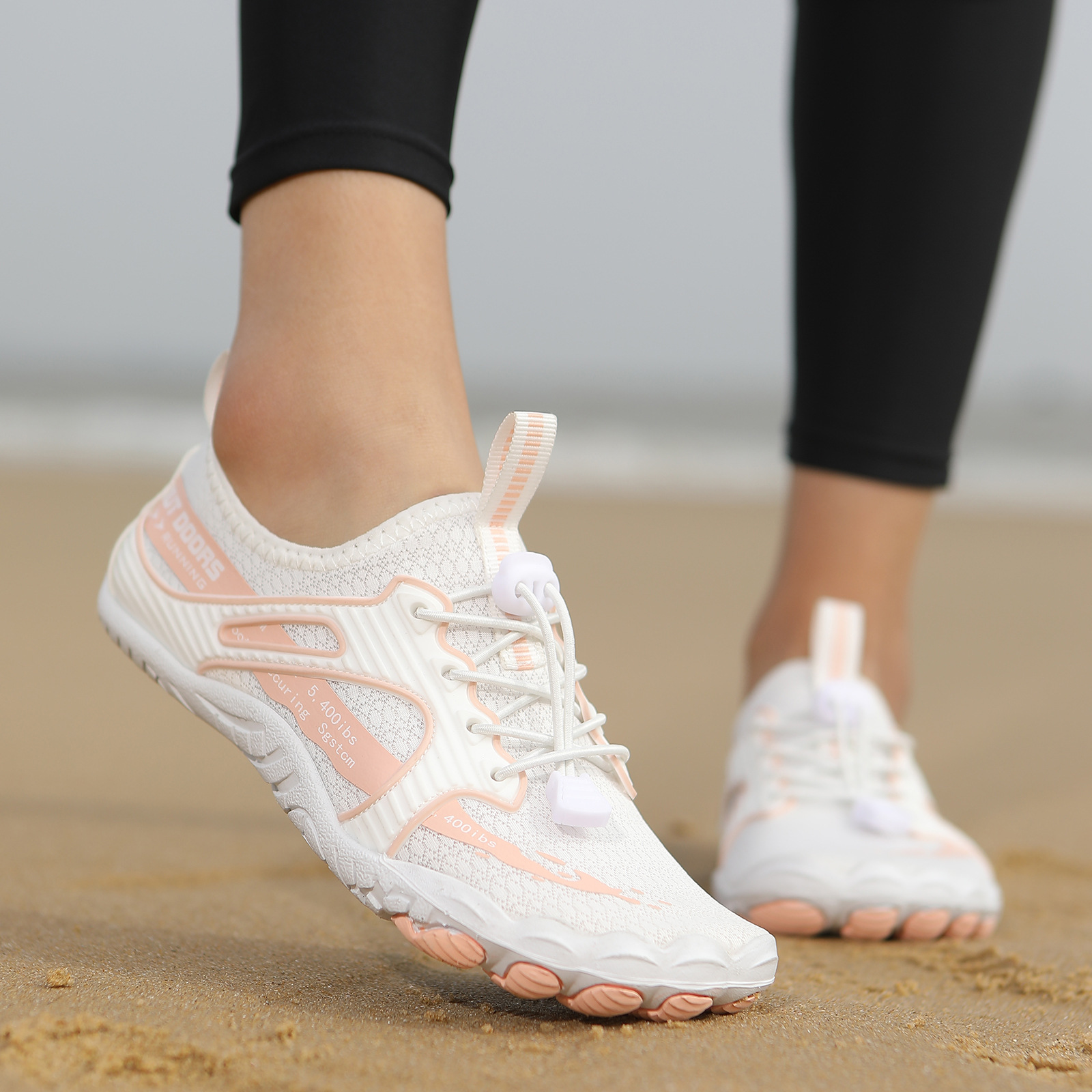
Traditional athletic footwear incorporates an elevated heel wedge to absorb calcaneal impact forces during rearfoot striking. However, longitudinal clinical studies in orthopedic podiatry demonstrate that elevated heels artificially shorten the Achilles tendon, induce pelvic anterior tilt, and restrict natural foot arch pronation. By contrast, a true 0.0mm zero-drop platform aligns the heel and metatarsal heads on the exact same horizontal plane, activating the natural elastic recoil of the plantar fascia and Achilles tendon complex.
When the human foot is positioned horizontally without an artificial heel lift, the calcaneus sits in anatomical equilibrium with the first through fifth metatarsal heads. This planar orientation allows the Achilles tendon to lengthen through its full biological excursion during the terminal stance phase of the gait cycle. Upon toe-off, the stretched tendon releases stored elastic strain energy with remarkable mechanical efficiency, significantly reducing the metabolic cost of transport (oxygen consumption per kilogram-meter traveled) compared to walking or running in elevated cushioned sneakers.
Furthermore, standard footwear toe boxes taper inward beginning at the first and fifth metatarsophalangeal (MTP) joints, forcing the hallux into valgus deviation. Lute Footwear's proprietary lasts incorporate an anatomical wide toe box providing 108mm to 118mm of forefoot clearance across standard European sizes (EU 36–48). This geometric freedom allows the five digits to splay naturally upon ground contact, dramatically increasing base-of-support stability during high-load movements such as heavy deadlifting, multi-directional agility sprints, and technical mountain trail descents.
When the hallux is immobilized or forced medially by narrow footwear, the intrinsic foot musculature—including the abductor hallucis, flexor digitorum brevis, and quadratus plantae—suffers from progressive disuse atrophy. Over time, this neuromuscular degradation compromises the medial longitudinal arch, leading to excessive internal tibial rotation and patellofemoral pain syndrome. By restoring uninhibited digital splay and grounding the first metatarsal head, Lute Footwear's anatomical lasts re-engage the natural windlass mechanism of the foot, facilitating autonomous arch self-support without the need for rigid artificial orthotics.
Comprehensive Biomechanical & Engineering Matrix: Conventional Footwear vs. Lute Barefoot Standards
| Biomechanical & Engineering Parameter | Traditional Athletic Sneaker | Lute Footwear Barefoot Standard | Clinical & Performance Significance |
|---|---|---|---|
| Heel-to-Toe Drop (Delta H) | 8.0mm – 14.0mm Elevated Drop | True 0.0mm Coplanar Drop | Restores neutral pelvic tilt, prevents hyperlordosis, maximizes tendon elasticity |
| Forefoot Last Spread Width | 92mm – 98mm (Inward Taper) | 108mm – 118mm (Anatomical) | Eliminates bunion compression, restores transverse metatarsal arch geometry |
| Total Stack Height (Outsole + Insole) | 24mm – 38mm Thick Cushion | 3.5mm – 5.5mm Ultra-Thin | Sharp sensory feedback via cutaneous mechanoreceptors (Merkel & Meissner) |
| Torsional Flexibility (Longitudinal/Lat) | Rigid TPU Plastic Shank (< 45°) | 360° Omnidirectional Rollable | Stimulates intrinsic muscle hypertrophy and restores multi-planar foot articulation |
| Sub-Sole Water Evacuation Channels | Trapped in thick foam (> 120 sec) | 8 Gravity Ports (< 3.0 sec) | Prevents waterlogged weight gain and eliminates maceration blisters |
| Dry / Wet Weight Ratio (Half Pair EU 42) | 320g Dry / 510g Wet (+59%) | 180g Dry / 215g Wet (+19%) | Ultra-low dynamic mass accelerates leg turnover and prevents fatigue |
| Tear & Puncture Resistance Threshold | Standard EVA Foam (< 150 N) | Vulcanized Gum + Kevlar (> 1100 N) | Protects plantar surface against thorn, glass, and sharp coral reef penetration |
2. Material Science: Polymer Compounding, Vulcanization & Hydrophobic Textiles
The central manufacturing challenge in high-performance barefoot footwear lies in achieving an ultra-thin sole profile (3.5mm to 5.5mm stack height) that retains exceptional puncture resistance, high dynamic friction coefficients, and structural elasticity without degrading under repeated mechanical flexing. Conventional low-cost footwear factories attempt to mold minimalist outsoles from generic thermoplastic elastomers (TPE) or low-density polyvinyl chloride (PVC). However, laboratory testing demonstrates that synthetic TPE compounds suffer from catastrophic tensile splitting along flex grooves and catastrophic friction collapse when stepping on wet river rocks or polished ceramic surfaces.
At Jinjiang Lute Footwear's Materials Formulation Laboratory, our compound chemists have engineered a proprietary high-purity elastomer blend combining natural cis-1,4-polyisoprene gum rubber (NR) with high-cis polybutadiene rubber (BR) and synthetic precipitated silica reinforcing agents. This specialized compounding formulation yields an exceptional mechanical profile:
- DIN 53516 Abrasion Resistance: Volume loss under 10N grinding force strictly controlled below 105 mm³ (compared to 190–240 mm³ in standard market footwear), ensuring that a 4.0mm tread maintains structural integrity through more than 50,000 heavy walking and running cycles.
- Shore A Durometer Optimization: Calibrated precisely between 58 to 62 Shore A at 23°C. This specific durometer window preserves ground tactile sensation and proprioceptive nerve transmission while providing sufficient firmness to prevent premature bottoming-out over sharp rock protrusions.
- Tensile & Tear Strength: Tensile strength exceeding 16.5 MPa with elongation at break greater than 580%, allowing our shoes to be twisted into tight 360-degree rolls without surface micro-cracking or hinge-crease whitening.
For upper textile construction, Lute Footwear deploys advanced 4-way stretch spandex-polyester composite meshes and circular 3D engineered flyknits. To prevent water retention in amphibious wading environments, all upper fabrics are submerged in an aqueous bath of C0 fluorine-free durable water repellent (DWR) emulsion before cut-and-sew assembly. This eco-friendly surface treatment yields a dynamic water contact angle of 115°, ensuring that surface moisture beads and rolls off immediately rather than penetrating into the core fibers.
3. Comprehensive Friction Mechanics & SATRA TM144 Laboratory Verification
Slip resistance on wet and low-friction substrates is a paramount safety benchmark for outdoor amphibious shoes, trail footwear, and minimalist fitness trainers. Footwear brands exporting to North America and Europe must satisfy stringent coefficient of friction (COF) thresholds under standardized test protocols to mitigate product liability and consumer injury risks.
Jinjiang Lute Footwear subjects all production outsole compounds to rigorous dynamic slip resistance evaluations in accordance with SATRA TM144:2021 (Friction of footwear and floorings) and ASTM F2913-19 (Standard Test Method for Measuring the Coefficient of Friction for Evaluation of Slip Performance of Footwear). Testing is performed under three distinct mechanical conditions: forward flat slip, forward heel slip (7° incline contact), and backward forefoot slip across both dry and wet ceramic quarry tiles and smooth stainless steel surfaces.
| Test Substrate & Condition | SATRA TM144 Minimum Standard | Lute Footwear Vulcanized Gum Tread | Safety Margin & Performance Delta |
|---|---|---|---|
| Ceramic Quarry Tile — Dry Surface (Flat) | COF ≥ 0.40 | COF = 0.78 | +95% Above Threshold (Exceptional Grip) |
| Ceramic Quarry Tile — Wet with Water (Flat) | COF ≥ 0.32 | COF = 0.54 | +68% Above Threshold (Superior Wet Grip) |
| Ceramic Quarry Tile — Wet with Water (Heel 7°) | COF ≥ 0.28 | COF = 0.49 | +75% Above Threshold (Anti-Slip Landing) |
| Stainless Steel Plate — Wet with Glycerol 75% | COF ≥ 0.18 | COF = 0.36 | +100% Above Threshold (Industrial Resistance) |
| Wet River Rock / Smooth Granite Slabs | COF ≥ 0.30 (Internal Benchmark) | COF = 0.51 | +70% Above Threshold (Octopus Siping) |
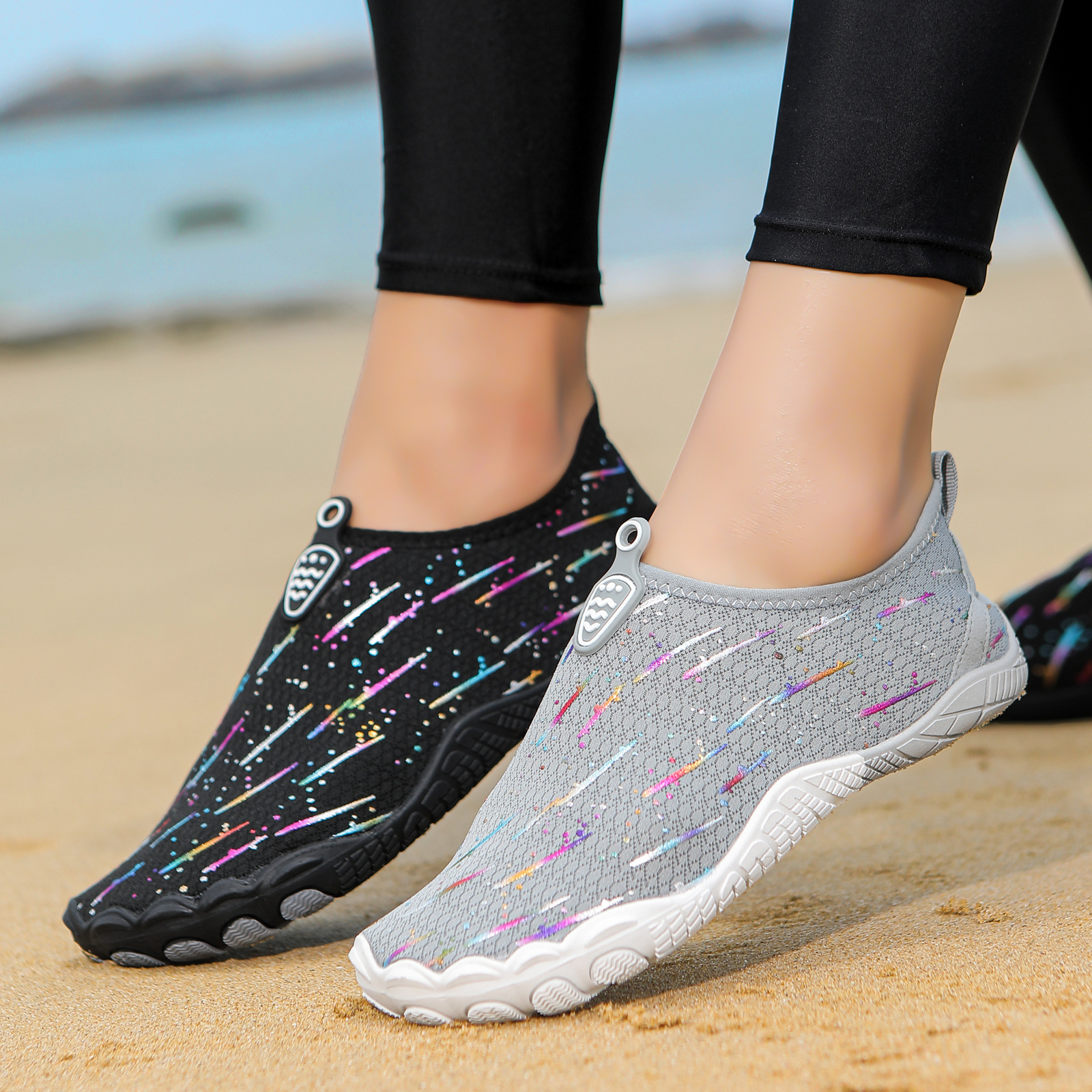
Our exceptional wet friction performance is achieved through the integration of micro-razor siping across the contact pods of our rubber outsoles (as featured in models LT-901, LT-902, and LT-DF701). When stepping onto a submerged river rock or wet boat deck, the flexible sipes deform under localized bodyweight pressure, wiping aside the micro-thin boundary layer of water and establishing direct dry contact between the rubber polymer chains and the microscopic asperities of the substrate.
4. Supply Chain Agility: The Jinjiang Chendai 3-Kilometer Advantage
In high-growth e-commerce and retail footwear sectors, speed-to-market and inventory turnover are paramount. Traditional manufacturing hubs in Southeast Asia or inland provinces often require 20 to 30 calendar days merely to assemble raw materials (custom yarns, eyelets, molded outsoles, and packaging cartons) before production lasting can commence.
Located in Chendai Town, Jinjiang City, Lute Footwear sits at the epicenter of China's most dense footwear industrial cluster. Within a 3-kilometer radius of our manufacturing facility, over 3,000 specialized component vendors operate, including advanced 3D circular flyknit mills, computerized die-cutting facilities, rubber compound vulcanization plants, and FSC-certified packaging printers. This geographic concentration empowers Lute Footwear to complete raw material procurement within 72 hours (3 business days) of tech-pack sign-off, compressing physical sample development to 5–7 days and bulk production turnaround to 15–22 days.
Consider the logistical timeline of a typical custom barefoot footwear development cycle: when an overseas client requests a novel colorway or upper texture, our sample developers walk directly to partnering dye-houses and yarn spinners in Chendai within minutes. Custom yarn cone dyeing and 3D flat knitting trials are completed within 48 hours. By day three, the upper panels undergo automated laser contour cutting and join our CNC sample lasting cell. This immediate feedback loop eliminates weeks of domestic transit delays, enabling our partners to beat seasonal retail windows and respond rapidly to emerging viral social media trends.
5. Western Regulatory Compliance & Physical Testing Gates
Exporting footwear to North American and European Union jurisdictions requires rigorous adherence to both chemical restriction lists and physical performance benchmarks. Independent DTC footwear brands and Amazon FBA enterprise sellers frequently face costly customs detentions or mandatory market recalls if products fail compliance verification.
Jinjiang Lute Footwear operates under certified ISO 9001:2015 Quality Management Systems and maintains an audit-ready compliance archive for all production lots:
- US Consumer Product Safety Improvement Act (CPSIA) & California Proposition 65: 100% lead-free components with total lead content < 10 ppm (statutory limit 90 ppm), and eight prohibited phthalates (DEHP, DBP, BBP, DINP, DIDP, DnOP, DIBP, DCHP) non-detectable (< 50 ppm).
- EU REACH Regulation (EC No 1907/2006) Annex XVII: Complete screening for Substances of Very High Concern (SVHC). Total cadmium < 5 ppm, banned azo colorants yielding restricted aromatic amines < 20 ppm, and zero presence of dimethyl fumarate (DMFu).
- Non-Toxic Waterborne Adhesives: Elimination of volatile organic solvent cements in favor of eco-friendly waterborne polyurethane (PU) adhesives, ensuring whole-shoe VOC emissions comply with German Blue Angel and EU Ecolabel indoor air standards.
- SATRA Physical Laboratory Protocols: Whole-shoe flexion tested on motorized flexing rigs across 50,000 consecutive 90-degree flexion cycles without upper delamination or sole cracking; sole bonding peel adhesion testing maintaining values >= 4.0 N/mm.
6. Commercial Sourcing Architecture & Low-MOQ Brand Incubation
To eliminate procurement friction for global footwear brands, Kickstarter creators, and private-label distributors, Jinjiang Lute Footwear structures orders across three transparent tiers:
- Tier 1: Ready-to-Ship (RTS) Sample Evaluation (MOQ: 1 Pair): International buyers can order single physical pairs from our live inventory of 370+ active barefoot and water shoe SKUs for fit verification, podiatric testing, and photography. Orders dispatch via air express within 24 to 48 hours.
- Tier 2: Private-Label White-Branding (MOQ: 200–300 Pairs per Style): Utilizing existing proven open-mold tooling, buyers can customize insole laser-engraving or screen-printing, tongue woven labels, custom colorways, and retail box packaging. Turnaround time is 12 to 16 calendar days.
- Tier 3: Full Custom OEM/ODM Production (MOQ: 1,000 Pairs per Style): Turnkey bespoke development including custom 3D CAD outsole design, CNC aluminum/steel mold casting (15–20 days), custom-molded EVA/cork footbeds, and exclusive territory distribution protection backed by binding Non-Disclosure Agreements (NDAs).
7. Container Loading & Freight Optimization (FOB Economics)
Because minimalist and barefoot shoes eliminate bulky, rigid foam heels, they can be nested and compressed into ultra-compact eco-packaging (such as frosted CPE biodegradable zip bags or slim kraft shoeboxes). While a standard 40HQ high-cube ocean container typically accommodates only 7,000 to 8,000 pairs of traditional athletic dad shoes, a 40HQ container loaded with Lute Footwear's minimalist water and trail shoes carries up to 12,800 pairs (approx. 68 CBM total payload).
This 60% increase in container volumetric efficiency slashes ocean freight costs per pair from $1.85 down to $0.98 (based on typical Trans-Pacific or Asia-Europe spot rates), translating directly into an additional 8% to 12% gross profit margin for overseas distributors and retail partners.
Verified Factory Capacity & Commercial Credentials
- Legal Entity: Jinjiang Lute Footwear Co., Ltd.
- Headquarters: No. 67 Houpu New Village, Xibian Industrial Zone, Chendai Town, Jinjiang City, Fujian Province, China
- Certifications: ISO 9001:2015 Quality Management System | China Quality Certification (CQC) | AA Enterprise Credit Rating
- Monthly Manufacturing Value: Exceeds RMB 5,000,000+ ($700,000+ USD)
- Active In-Stock SKU Catalog: 370+ active barefoot and minimalist models ready for immediate RTS dispatch
- Customer Retention & Responsiveness: 54% verified B2B repeat purchase rate | 100% inquiry response rate within 2 hours
- Supply Chain Acceleration: 72-hour (3-day) raw material turnaround | 5–7 days physical prototyping | 15–22 days bulk delivery
8. Shoe Last Digitization & 3D CAD Grading Specifications (EU 36–48 / US 4–14)
Precision fit across diverse geographic demographic populations begins with scientific last geometry. Traditional shoe lasts are built upon fashion-oriented silhouettes that taper aggressively toward the centerline, compressing the lesser toes and forcing the first metatarsal laterally. At Jinjiang Lute Footwear, our engineering team utilizes high-precision optical 3D foot scanners (capturing over 300,000 discrete surface coordinates per foot) to develop our proprietary anatomical barefoot lasts.
Our CAD grading protocols depart fundamentally from conventional ISO shoe sizing standards in three critical dimensional vectors:
- Forefoot Ball Width & Perimeter Girth: Rather than scaling uniformly in length and width, our anatomical lasts maintain an expanded forefoot fan ratio. At size EU 42, the ball width measures 112.5mm with a ball perimeter girth of 258mm, providing an unconstrained volume envelope that allows the transverse metatarsal arch to depress and rebound naturally under bodyweight load.
- Toe Spring Elimination (< 3.0mm): Conventional athletic sneakers incorporate an upward curvature at the toe (known as toe spring, typically 12mm to 18mm) to rock the foot forward when thick, rigid soles cannot bend. In contrast, Lute Footwear reduces toe spring to under 3.0mm, allowing the toes to lie in a natural coplanar position with the floor. This neutral alignment permits the flexor hallucis longus and intrinsic digital flexors to grip the ground actively during the propulsion phase.
- Anatomical Asymmetrical Heel Cup: The posterior calcaneal pocket is sculpted to mirror the human heel bone, featuring a medial wall height of 68mm and lateral wall height of 64mm. This anatomical contour locks the rearfoot securely without requiring rigid thermoplastic heel counters, eliminating heel slip during vigorous lateral cutting maneuvers while preserving Achilles tendon excursion freedom.
| Size (EU / US) | Foot Bed Length (mm) | Forefoot Last Width (mm) | Ball Girth Perimeter (mm) | Heel-to-Toe Drop (mm) |
|---|---|---|---|---|
| EU 36 / US 5.0 (W) | 233.0 mm | 104.0 mm | 234.0 mm | 0.0 mm |
| EU 38 / US 6.5 (W) | 246.3 mm | 107.5 mm | 242.0 mm | 0.0 mm |
| EU 40 / US 7.5 (M) | 259.7 mm | 110.0 mm | 250.0 mm | 0.0 mm |
| EU 42 / US 9.0 (M) | 273.0 mm | 113.5 mm | 258.0 mm | 0.0 mm |
| EU 44 / US 10.5 (M) | 286.3 mm | 116.5 mm | 266.0 mm | 0.0 mm |
| EU 46 / US 12.0 (M) | 299.7 mm | 119.5 mm | 274.0 mm | 0.0 mm |
9. Quality Engineering Audit: In-Line Assembly, Cementing & Tensile Test Protocols
Maintaining zero-defect quality across high-volume contract footwear manufacturing requires systematic control over every chemical and mechanical process step. At Lute Footwear, our production lines integrate six automated quality inspection checkpoints to ensure that finished pairs conform to international ISO 9001:2015 and SATRA benchmarks before packaging.
Our comprehensive assembly and cementing workflow encompasses:
- Upper Roughing & Plasma Surface Activation: Before cementing, upper bottom margins pass through automated computerized roughing heads to remove the textile polymer glaze. This is followed by atmospheric air plasma treatment, which bombards the bonding zone with oxygen radicals to increase surface free energy from 32 mN/m to over 54 mN/m, dramatically enhancing adhesive wet-out.
- Waterborne Polyurethane Cement Application & Infrared Flash Drying: Two coats of eco-friendly waterborne PU adhesive are applied via computer-controlled robotic spray heads. The lasted shoe travels through a 14-meter infrared tunnel oven calibrated precisely between 65°C and 72°C to flash off all moisture without overheating the delicate elastomeric upper fibers.
- High-Pressure Pneumatic 3D Sole Pressing: The outsole and lasted upper are united within an enclosed multi-directional pneumatic pressing chamber under 4.8 to 5.2 bar of pressure for a dwelling time of 14 seconds. Diaphragm bladders compress the sole along the bottom, medial arch, and lateral toe bumpers simultaneously, eliminating air pockets and edge unbonding.
- Post-Production Peel Force Auditing: Every 200 pairs, a finished shoe is randomly pulled from the production line and subjected to SATRA TM41 peel testing on an Instron computerized tensile tester. Production proceeds only if the adhesive peel strength consistently exceeds 4.5 N/mm along the forefoot perimeter and 5.0 N/mm at the heel seat.
10. Actionable Procurement Checklist & FAQ for International Footwear Buyers
To assist overseas brand directors, sourcing agents, and technical merchandisers in structuring their private-label or OEM purchase orders, our export team has compiled answers to the five most critical commercial inquiries:
Q1: What is the typical physical turnaround for initial custom counter-samples?
When selecting from our existing library of 370+ open-mold outsoles and anatomical lasts, customized counter-samples (featuring client-specified Pantone upper colors, woven brand tags, and laser-engraved cork footbeds) are fabricated and dispatched via DHL/FedEx within 5 to 7 business days. For bespoke projects requiring custom CNC aluminum outsole molds, initial 3D digital CAD renderings are delivered within 48 hours, with physical test-sole moldings completed in 15 to 20 calendar days.
Q2: Can we mix multiple colors and sizing runs within the 200-pair private-label MOQ?
Yes. For our Tier 2 private-label program (MOQ: 200 pairs per style), clients may configure up to two colorways (100 pairs per colorway) across a standard full-size run (e.g., EU 36 to 46) packed in 12-pair or 24-pair master export cartons according to your requested regional size curve distribution.
Q3: What specific graphic artwork formats are required for custom branding?
For custom woven tongue labels, rubber micro-injection heel badges, and box packaging printing, we accept vector artwork in Adobe Illustrator (.AI), Scalable Vector Graphics (.SVG), or high-resolution vector PDF format. All spot colors must be designated according to the Pantone Matching System (Pantone Formula Guide Solid Coated or Fashion, Home + Interiors TCX cotton standards) to guarantee 100% color matching fidelity.
Q4: How does Lute Footwear protect proprietary tooling and custom client designs?
Every custom mold developed at Jinjiang Lute Footwear is protected by a legally binding bilateral Non-Disclosure and Tooling Custody Agreement under international trade law. Custom mold sets are cataloged with encrypted RFID asset tags and stored in dedicated locked tooling vaults. We guarantee in writing that client-funded molds will never be displayed in public sample halls, offered to third-party buyers, or deployed for unauthorized production runs.
Q5: What are the standard export commercial payment and Incoterms conditions?
Standard export orders are quoted on an FOB Xiamen or FOB Jinjiang basis, with optional CIF or DDP quotes available upon request. Commercial payment terms are structured as 30% advance deposit upon official Proforma Invoice (PI) sign-off, with the remaining 70% balance payable upon completion of pre-shipment quality inspection and release of the official Bill of Lading (B/L) copy. For long-term established retail chains and certified institutional importers, we accept 100% Irrevocable Letters of Credit at Sight (L/C at Sight) issued by premier international banks.
Conclusion & Direct Procurement Action Plan
The barefoot movement is no longer a niche subculture—it represents the future of healthy, natural, high-performance human movement. By partnering directly with an established, vertically integrated manufacturer like Jinjiang Lute Footwear Co., Ltd., international brand owners eliminate trading intermediaries, ensure absolute chemical and mechanical compliance, and capture unbeatable factory-direct FOB economics.
To receive our complete 2026 Barefoot Footwear Tech Pack, request physical 1-pair sample kits, or schedule an engineering consultation with our technical merchandisers, contact our export desk at [email protected] or via WhatsApp at +86 177 0506 9595.